About Me
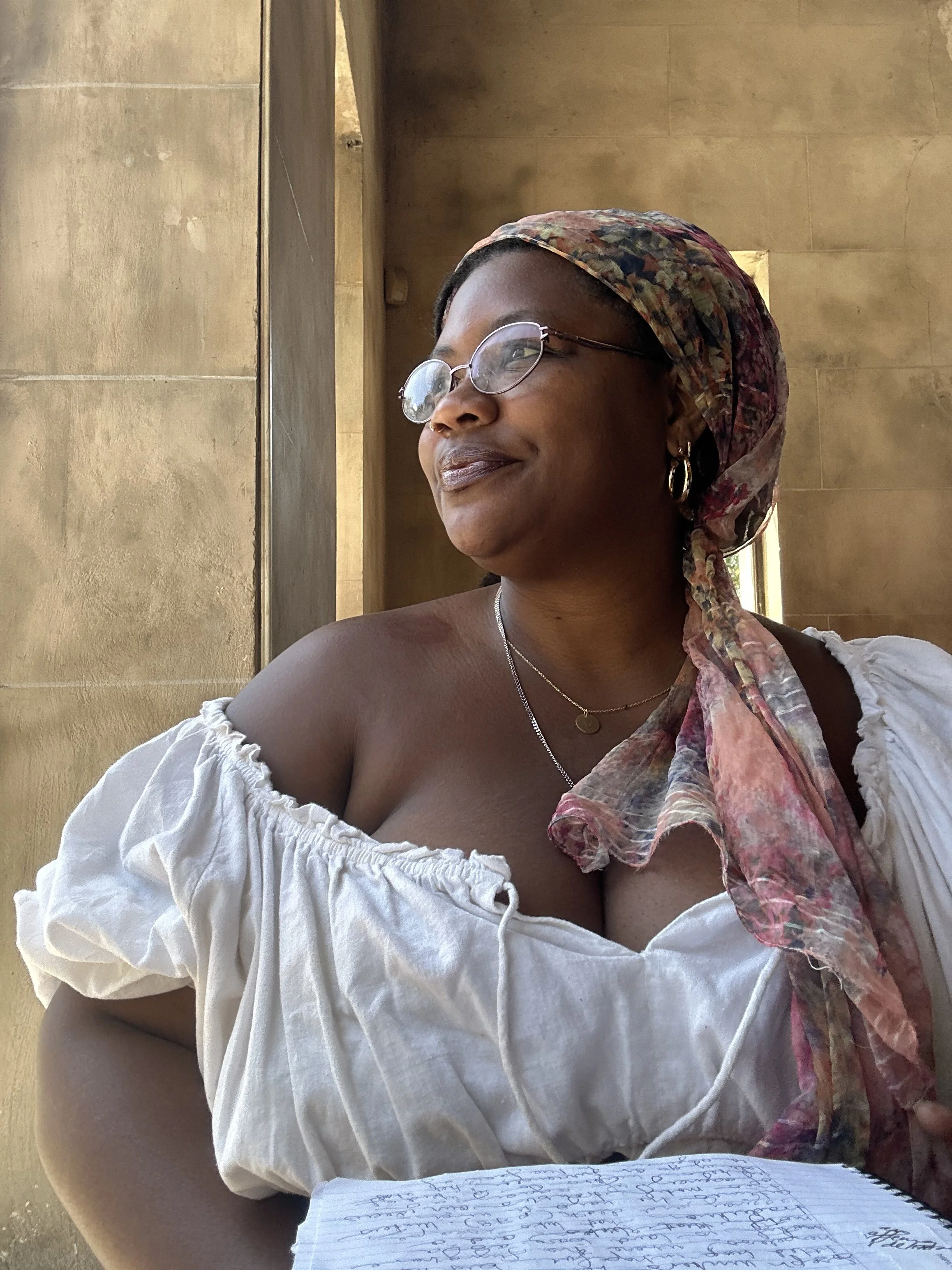
Hello!I came into this world as a womb-surviving twin. I was born alread already intimate with loss with death as my companion. That first death has shaped me in innumerable ways and has instilled in me the knowing that some of are are born as a bridge between worlds.
I am from Richmond, California—raised in the San Francisco Bay estuary where fresh water meets salt. My ancestors migrated from Louisiana, Arkansas, and Mississippi during the Great Migration. Now I live in New Orleans, another estuary. I meditate on being from one brackish place and living in another, understanding that migration is a right, it is memory, and begets retuning to retrieve what you may have left behind in the crossing.
I have lived with chronic suicidality for as long as I can remember. This is a current running beneath daily life. Where others might turn away, I have learned to turn toward. I see contemplating death as doorway rather than a trap. I carry chronic suicidality not as a wound to fix but as a teacher that keeps me honest about what it costs to stay, and how beauty makes that cost bearable. Proximity to dying can teach us how to live more honestly, more tenderly, more awake to beauty.
I stay present with remains, with both the beauty and the dying, the bloom and the rot. I honor ways of being that doesn't deny death but dances with it, that finds sacredness in decay. I see the patterns: how cycles repeat, how death always feeds life, how the past composts making way for new life.
My practice is rooted in ancestral care—guiding people toward their own relationships with the ancestors through writing and multimedia creative facilitation. I hold containers where people can learn to call on their dead, to tend the lineage that tends them. As a filmmaker, dancer, and book artist, I witness and archive what is ephemeral, what the body remembers but cannot speak. As a literary justice curator and practitioner of care and beauty, I hold space where Black, queer, trans, Fat, disabled, and marginalized folks can access stories that affirm our survival and complexity.
My scholarship and my practice refuses transcending the body and recognizes that liberation is not about transcending death, but about learning to live fully in its presence. I hold space where we don't have to hide our suicidality, our grief, our proximity to violence and erasure. I acknowledge the struggles—the ones that teach us, the ones that ask us to stay even when staying is hard. And I hold space for those struggles without rushing them toward resolution.
Brackish Baptisms—this is what I call the work of being immersed in the place where salt meets fresh, where past meets present, where the living commune with the dead. It is the practice of being with what remains: the ancestral fragments, the embodied memories, the stories that reside in our bodies even when there’s no official record.
I chose this name Clover—a plant that fixes nitrogen in soil, that feeds what surrounds it, that grows low to the ground and spreads in overlooked places. Clover is a healer plant, a companion plant. This is a lineage I choose to claim. Rooted and nourishing the ground I move upon .
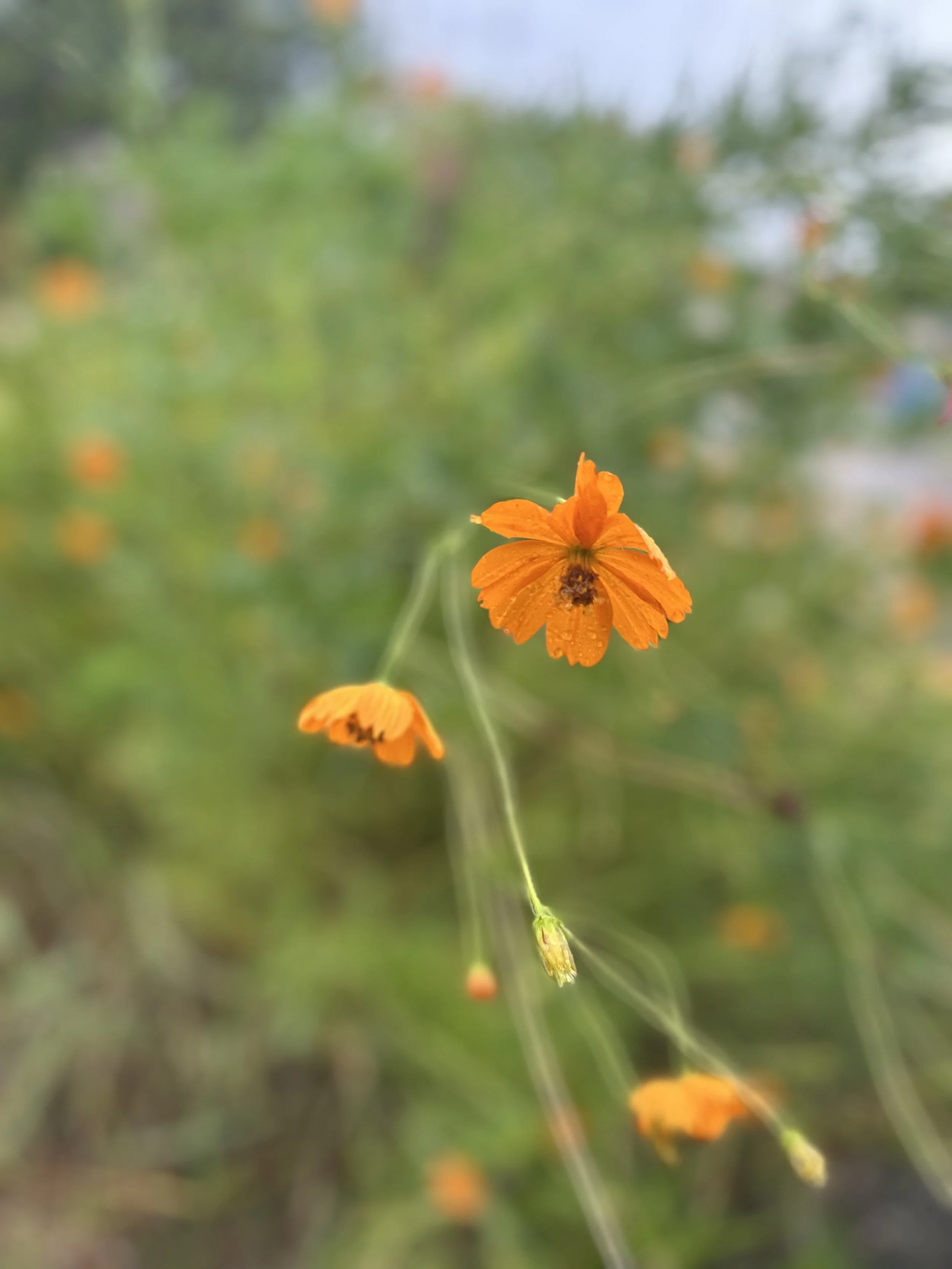
This work—all of it—is my practice of staying with remains. Not staying in spite of death, but staying because I have learned to live with it, to let it teach me, to find the beauty that makes the remains a place I can inhabit rather than a place I must flee. The flowers love me. The water holds me. The ancestors remind me that love and loss are braided together, and that to be alive is to be in constant conversation with what has died and what is dying .
Our Story